
You're Raising a Fund. Your Personal Brand Is Your First Close.
If you are raising capital right now, this article is for you.
You are an emerging fund manager raising your first or second LP commitment. You are a founder raising a B or C round and discovering that the deck does not actually do the work you thought it would. You are a nonprofit executive director running a multi-year capital campaign and watching deal sizes climb past anything you have closed before.
Three different jobs. One identical problem.
You think you are selling the fund, the company, or the mission. You are not.
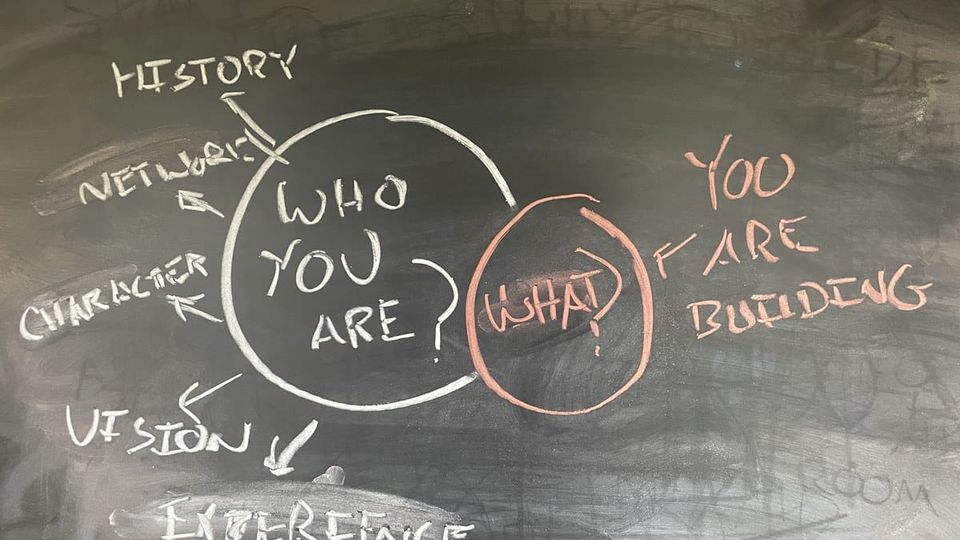
You are selling yourself. Your personal brand is the first close. The fund or the company or the mission is the second close, and the second close does not happen if the first close has not.
Most leaders raising capital have not done the first close. They have built a beautiful pitch deck and ignored the actual variable that determines whether the check shows up. This is the constraint I call identity-led positioning.
Why this happens
I worked on this constraint with Solomon, who founded a nonprofit called iDreamers. The model is interesting. They pair dreamers with mentors and investors who help fund and accelerate the dream. The work is real, the structure is honest, the model makes sense.
When Solomon and I started talking, the issue was not the model. The model was sound. The issue was that he was leading every conversation with the model, and the people on the other side of the table were not buying the model.
They were buying him.
This is what almost every founder, fund manager, and ED I work with on capital raising misses. Capital follows people first, products second. The product gets validated after the relationship is established. Investors and major donors do not write large checks to mechanisms. They write large checks to operators they trust to deploy the mechanism well.
Your personal brand is what tells them whether you are that operator.
You are the brand whether you like it or not
Most founders and fund managers I meet at this stage have a kind of allergic reaction to the phrase personal brand. They associate it with influencers, with self-promotion, with people on LinkedIn talking about their morning routine. They want their work to speak for itself.
I have news. The work does not speak for itself. The work has never spoken for itself. Capital allocators are humans deciding among other humans. The signal that crosses the line is not the deck. The signal is who you are when you are not pitching.
Your personal brand, in this context, is not a logo or a Twitter bio. It is the answer to questions allocators are asking themselves before they decide whether to even take the second meeting.
Why is this person the right one to do this thing?
What have they done that proves they will keep going when the rest of the team goes home?
What is thier relationship to the truth, especially uncomfortable truth?
What kind of leader do they become when this gets hard, and how do I know?
Are they someone other people I respect would also back?
If you are not actively answering these questions in public, on a regular cadence, in a voice that is recognizably yours, allocators are filling in their own answers from whatever scraps they can find. Your LinkedIn. Your last podcast. The way the second associate at the firm talked to their analyst friend about you over drinks. Random people's recollection of what you said at a conference three years ago.
That is your personal brand right now. Whether you have curated it or not.
The data backs this up
If you are wired to take this seriously only when the numbers say so, the numbers say so.
Bain studied publicly traded founder-led companies over a decade. They generated an average annual return of twenty-five percent, nearly double the S&P 500's fourteen percent. The market is not paying a premium because founders write better decks. The market is paying a premium because founder-led companies are easier to evaluate as an operator bet, and operator bets compound when the operator is visible, legible, and consistent.
Birmingham City University, working with research summarized by Matthew Hunt, found that startups using active founder-led marketing, where the founder shares insights and their personal journey, are 3.2 times more likely to succeed than startups where the founder stays behind the company. Not 32 percent more likely. 3.2 times. Read that as a multiplier on every other bet you are making.
And the customer side reinforces the capital side. Multiple recent Gen Z studies show that 72 to 77 percent of Gen Z prefers to buy from brands that share their personal values and champion visible social causes. The next decade of capital deployment, hiring, and customer acquisition is going to a generation that wants to know who is behind the company before they engage with the company. That is not a values trend. That is a market structure change.
The point is not that personal brand is nice to have. The point is that the data sources line up. Capital allocators bet on operators they can read. Customers buy from people whose values they recognize. The companies that figure this out outperform on a measurable basis. The leader who refuses to be visible is making a strategic decision against the data.
Sources: Bain via HBR on founder-led outperformance, Birmingham City University on founder-led marketing.
What Solomon and I worked on
Solomon's situation, like most founders raising, was that the public version of him underrepresented the actual founder. The actual Solomon was sharper, clearer, more committed, more grounded than the public Solomon. The public Solomon was a series of accidents. A few LinkedIn posts, a few podcast appearances, an old website bio. None of it was wrong. All of it was thin.
When investors and prospective mentors looked him up, they got the thin version. They formed an impression based on the thin version. Then he showed up to the meeting and had to overcome the thin version while also pitching the model.
That is two jobs. Most pitches barely accomplish one. Doing two means doing both badly.
The work we did was straightforward. We thickened the public version. Real pieces about the work. Specific points of view. Recurring presence in the conversations his prospective allocators were already in. Photographs that looked like the founder, not like a stock image of a founder. A bio that read like a person, not a press release.
None of this is sophisticated. All of it requires the founder to actually decide who they are publicly and commit to showing up that way consistently. Which is the part most leaders avoid, because deciding who you are publicly means saying out loud what you stand for, what you do not stand for, and who you are and are not for. Most founders prefer to leave that ambiguous. The ambiguity is comforting. The ambiguity is also why the close is taking so long.
You can apply this regardless of what you are raising
The reason this article applies to fund managers, growth-stage CEOs, and nonprofit EDs in the same breath is that the underlying capital allocation logic is the same.
A pension fund LP allocating to your emerging fund is making a bet on you. The fund mechanics are validated. The strategy is plausible. The track record is short. What they are buying is your judgment, your follow-through, your ability to be honest with them when something is going wrong. They are buying you.
A growth-stage VC writing your Series B is making a bet on you. The product has traction. The market is real. The financials look how they look. What is uncertain is whether you will be the leader who scales this from twenty to two hundred million in revenue. They are buying you.
A major donor making a seven-figure pledge to your campaign is making a bet on you. The mission is compelling. The plan is sound. What they are buying is whether you will deploy the gift the way you said you would, whether you will show up to communicate what you did with it, whether you will represent the mission in the rooms they care about. They are buying you.
In all three cases, the deck, the strategy, the impact metrics, the financials are necessary conditions. None of them are sufficient. The sufficient condition is the personal brand of the person raising. You.
Why most leaders skip this
Doing personal brand work as a leader raising capital is uncomfortable. There are real reasons most leaders skip it.
You feel like you are bragging. You are not. You are clarifying. The only way to not do personal brand work is to leave the impression of you to whatever cobbled-together fragments allocators can find on their own. That is not modesty. That is abdication.
You feel like it is a distraction from the real work of running the company or fund or organization. It is not. It is the real work, during a fundraise. There is the operating work and there is the raising work. The raising work is mostly trust transfer, and trust transfer is mostly personal brand, communicated consistently, over a long enough horizon to compound.
You do not know what to say. This is the real reason. Most leaders avoid personal brand work because they do not know what they actually believe with enough conviction to say it in public, repeatedly. The work, then, is not learning to write LinkedIn posts. The work is figuring out what you actually believe.
That second piece is harder than it sounds. It is also where almost every personal brand engagement I run begins. We do not start with content. We start with what the founder actually thinks, about everything, with the politeness stripped out.
Once that is clear, the content writes itself. Identity-led positioning becomes the engine, not the obstacle.
What to do with this
If you are in an active raise right now, do this.
Open a clean document. Write three sentences that begin with "I believe…" Make them specific. Make them about something other than your sector. Make them sentences a serious capital allocator would read and either agree with or disagree with, but not feel neutral about.
Most leaders cannot do this exercise on a first try. Their I-believe sentences are platitudes that nobody could disagree with, because saying anything disagreeable feels risky. If your sentences could be on a poster in a corporate lobby, they are not the right sentences. Try again.
Once you have three real I-believes, look at your last twenty pieces of public content. Tweets, posts, articles, podcast appearances. Are they expressing the I-believes? Or are they generic industry commentary that any of your competitors could have written?
If they are generic, you have just diagnosed your fundraising problem. Not all of it. The piece that lives in the personal brand layer.
Fix that. The deck is fine. The deck has always been fine. The pitch has always been fine.
The brand is the first close. Get the first close before you ask for the second.
So much respect.
---
Frequently asked questions
Q: Why is personal brand important when raising capital? A: Capital allocators write checks to people, not mechanisms. The fund, the company, and the mission are the second close. The first close is the operator. If the allocator cannot answer who you are and whether they trust your judgment, the deck never gets the chance to do its job. Personal brand is what answers the first-close questions before the second-close conversation happens.
Q: What is identity-led positioning? A: It's the strategic move of leading with who you are and what you believe, rather than leading with the product or mechanism. For founders raising capital, identity-led positioning means making the allocator's first-close decision easy by being clear and specific about your judgment, your follow-through, and your view of the world. The work itself comes second. The operator behind it comes first.
Q: What do investors actually evaluate when meeting a founder? A: They are running a parallel evaluation alongside the pitch. Why is this person the right one to do this thing. What have they done that proves they will keep going when it gets hard. What is their relationship to uncomfortable truth. What kind of leader do they become under pressure. Whether other respected operators would back them. The deck does not answer these questions. The founder's public footprint does.
Q: How do you build a personal brand as a fund manager or founder? A: Start with what you actually believe, not with content. Write three "I believe" sentences specific and disagreeable enough that a serious allocator would either agree or disagree, but not feel neutral. Then look at your last twenty pieces of public content. If they're generic industry commentary anyone in your sector could have written, you've diagnosed the personal brand problem. The fix is consistency: real points of view, in your voice, on a recurring cadence, over a horizon long enough to compound.
Q: Why do most leaders avoid personal brand work? A: Three reasons. They feel like they're bragging when they're actually clarifying. They feel it's a distraction from operating, when in a raise the trust transfer is the operating work. And most importantly, they don't know what they actually believe with enough conviction to say it in public repeatedly. The third one is the real obstacle. The work is not learning to write LinkedIn posts. The work is figuring out what you actually believe.
Q: Do founder-led companies actually perform better? A: Yes, and the gap is wide. Bain found that publicly traded founder-led companies generated 25 percent average annual return over a decade, against 14 percent for the S&P 500. Birmingham City University research found startups using active founder-led marketing are 3.2 times more likely to succeed. Add Gen Z preference data showing 72 to 77 percent prefer to buy from brands that share their values, and the picture is consistent across capital, growth, and customer dimensions. Visibility is not a soft variable. It is a measurable performance multiplier.