When You Outgrow Your Team
It is easier for most CEOs to fire someone than to have one honest conversation.
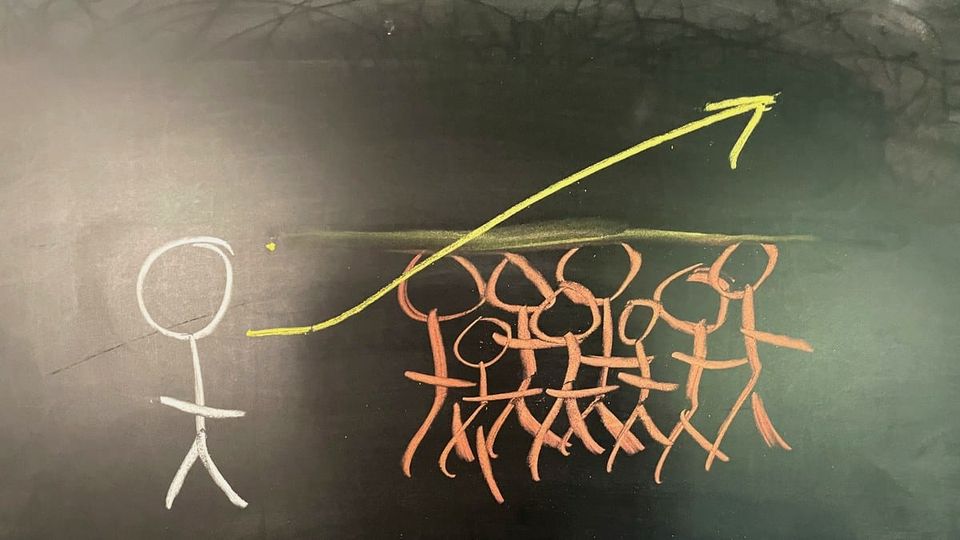
The company has grown past the capacity of some of the people who built it. Not past their effort. Not past their loyalty. Past their capability for the stage the business is entering.
And the person who has to name that is the leader who built the thing alongside them, who knows what they gave up, who remembers the years when the whole operation was held together by mutual belief and not much else.
Most leaders freeze here. They can see what needs to happen and cannot make themselves move, and the reason is not a shortage of courage. The people are real, the history is real, and naming the gap feels like a betrayal of both.
So the gap sits. And it costs more every quarter it sits, in ways the loyalty that protects it never accounts for.
Why growth outpaces the people who built the company
Roles change faster than people develop. That is the whole mechanism.
A director of operations at a ten person company is a senior generalist with strong execution. The job is personal output, carrying several workstreams at once, working shoulder to shoulder with the founder, and tolerating a lot of ambiguity. The person who thrives there is excellent at doing and good enough at leading.
A director of operations at a forty person company is a different job wearing the same title. Build and manage a team. Design systems you do not personally operate. Communicate across departments that now have their own politics. Make decisions with organizational consequence the ten person version never carried. The person who thrives there is excellent at leading and building systems, and personal output is almost beside the point.
The person who got you through ten is frequently not the person the forty person version requires. Not because they got worse. Because the role changed underneath them into something that asks for a different set of capabilities than the ones they have.
Every leader understands this in the abstract. It falls apart at the specific, because the specific person in that chair is not an illustration of a development gap. They are someone you know. Someone who gave the company something real. Someone who made the current stage possible. The abstract understanding and the specific loyalty sit in the same room, and the loyalty wins.
Until it cannot. And by then the cost has been compounding for longer than anyone wants to write down.
What it costs to keep someone in a role they have outgrown
The cost never shows up in a single week. It shows up in the aggregate of decisions made slightly below the level the role requires.
An operations director who has never built a system at forty person scale produces a company still running on improvised process well past the point where improvised process holds. Every week without the right system is a week of compounding inefficiency and quality risk. Nothing dramatic. It accumulates.
A sales director who was excellent at closing at ten people, and cannot build and manage a sales team at forty, produces a revenue function that depends entirely on their personal output. They are still closing, because that is what they are good at. Nobody is building the thing that lets the team close when that person is not in the room. Revenue is capped at one human's capacity, and the cap is invisible. It is a ceiling, not a wall.
A finance lead who keeps clean books but cannot produce forward-looking analysis leaves the company allocating resources off historical data instead of scenarios. Every significant investment decision gets made with less clarity than it could have had. That cost is hard to quantify and completely real.
These gaps compound across quarters. And they compound in a situation where the leader often cannot see them, because the person is still present, still performing, still trying. The effort is real. The output is real. It is not the output the role now requires.
Why carrying someone is not loyalty
Most leaders here define loyalty as protecting the person from the organizational consequence of the gap. Keep them in the role. Manage around them. Absorb the cost rather than make them face it.
That is definitly not loyalty. That is avoidance wearing loyalty's clothes.
The director who has been carried in a role they outgrew, without ever being told, is not protected. They are being denied the information they would need to make good decisions about their own career. They know something is off. They can feel you managing around them. They are building their own story about what it means, and that story is almost always worse than the truth. The silence was never for them.
But there is a step before any of this that almost nobody takes, and it is the one that would make most of these conversations unnecessary.
Build a coaching stack for your leadership team before you need one
Before you tell anyone they have outgrown their role, answer this: did you ever give them what they needed to grow into it?
Most CEOs and founders I work with have a coaching stack of their own. Formal or informal, they have mentors, they have coaches, they have people who tell them the truth. They built it because they needed it.
Almost none of them build one for their leadership team.
A strategic CEO assigns coaches to the leadership team based on the skill gaps the business is about to create. Not the gaps that already blew up. The ones the growth curve is going to open in the next eighteen months. Your ops director is going to need to build a team before they need to build a team. That is when the coach shows up.
I rarely see this. I wish every CEO at ten million knew it, because it is the difference between a leadership team that grows with the company and a leadership team that gets replaced by it.
When the coaching stack exists, the whole situation changes shape. You are not delivering a verdict on someone who never got a shot. You are having a conversation with someone who has been actively developing, with real support, and you both have a year of evidence about what took and what did not.
When it does not exist, the hard conversation is the CEO charging someone else for their own neglect.
Coach up, coach over, coach out
Gino Wickman and the EOS framework put language to this, and it is the most humane model I have found for what to do when a person and a role stop matching.
Coach up. Some people rise. The requirement moves and they move with it, and with real support they match the pace of the business. This happens more than most CEOs expect and almost never happens by accident.
Coach over. Some people stay right where their skill set is, and the role moves instead. An operations director at ten million becomes a facilities manager at thirty million. The company grew a job that no longer resembles the one they are excellent at, so they get the one they are excellent at.
Coach out. Only if the title change, or the new COO, hits the ego harder than the person can carry. That is when the difficult conversation actually happens, and by then it is the honest end of a long process rather than a surprise.
Most companies skip straight to a version of coach out that is really just termination, and they call it a performance issue.
How to move a leader into a smaller role without breaking them
Coach over is the one nobody handles well, because a title that reads as a demotion from the outside gets read that way by the person's peers first and the person second.
It starts with honesty. Something close to: the operations job for the last four years has been building this facility, and you did a great job at that. Now business operations includes multi-site logistics, a procurement function, and a team of fifteen, and that is completely outside your experience. We want to bring in someone who has already done that so we can hold this growth curve.
Then the part that has to be said out loud: this has nothing to do with your character and everything to do with the gap between the role and the experience.
That is a crucial conversation in exactly the sense Kerry Patterson, Joseph Grenny and their co-authors meant it. High stakes, strong emotions, opposing views. And most CEOs and founders hate them and avoid them, because they feel like confrontation. So it festers until the only remaining option is firing someone.
It is easier for a CEO to fire someone than to have a hard conversation with them, and the person getting fired might have been the best warehouse manager that company would ever have had.
When a CEO brings me this situation, I tell them the same thing. You have to have the conversation. Immediately. Every week you wait costs the company something and costs that person more.
How to have the conversation when someone has to leave
When coach out is the honest answer, the conversation has a shape.
Open on what changed in the role, not what changed in the person. The company grew into a stage where this function requires things it did not require two years ago. That framing separates it from a performance review and puts it where it belongs, in the evolution of the business.
Be specific about the capability, not the character. This function needs to be running a team of seven by Q3, and I have not seen that be where your strength or your interest lives. Specificity is the respectful move. It gives someone a clear picture instead of a vague dread.
Offer a real choice. Sometimes there is a better-matched role inside the company and sometimes there is not, but the conversation explores it rather than delivering a verdict. A supported transition out, handled with care, is a legitimate answer.
End with a next step and a date. Not "let's see how it goes." A specific follow-up inside a defined window, so the person leaves knowing what happens next instead of wondering.
Why coaching people through role changes removes future constraints
This is worth something well beyond the individual situation.
If the core team at ten million understands coach up, coach over, coach out as a proactive culture attribute rather than a reactive HR action, the whole thing stops being a threat. Role changes stop reading as punishment. People stop defending territory they have outgrown. The company gets the ability to move people into the work they are actually best at without anyone treating it as a demotion.
That is a scaling capability. Companies that have it can grow through their people. Companies that do not have to replace their people to grow, which is slower, more expensive, and considerably more painful for everyone involved.
It is also why some founders hire a CEO. They ran the model on themselves, found the gap honestly, and coached themselves over.
If you're a CEO whose company has outgrown you
Write down the name of the person on your team whose role has outgrown their capability. You already know who it is. The name arrived before the sentence finished.
Now write down how long you have known. Not when you started worrying. When you knew. That number in months is the cost that has been accumulating while the conversation waited.
Then ask the harder question, which is what you did with that time. Did that person have a coach? Did anyone name the gap to them early enough to do something about it? If the answer is no, the first honest conversation is not about their capability. It is about what you owe them before you ask them to absorb the consequence.
This is most of what constraint coaching actually looks like at the ten to fifty million stage. Not the org chart. The leader who has been avoiding one conversation for eleven months and calling it loyalty.
If you're an ED running a nonprofit at five to fifty million in giving
The capability gap has a specific texture here that makes avoidance last even longer.
Many of the people who built the organization are true believers. They came in below market because the mission mattered. They gave years someone else would have paid more for. They stayed through funding crises and leadership transitions and program pivots. The loyalty is not abstract. It was earned through sacrifice, specifically.
And the gap is real regardless. A program director who ran a small initiative brilliantly does not automatically handle a program at five times the scale. A development director who was excellent at relationship fundraising at five million is not automatically equipped for major gifts and institutional partnerships at fifteen.
The mission gives the avoidance cover in a way that profit never does. The person is committed, the commitment is genuine, and the gap is also genuine. Both are true at once. The mission is not served by protecting the first at the cost of the second.
The people who gave the most deserve honest information about where they stand, and a coach who can help them close the gap before anyone talks about roles. In leadership facilitation work with nonprofit teams, that is usually where the conversation starts, and it is usually the first time anyone has framed it as development rather than judgment.
Frequently asked questions
How do you know when an employee has outgrown their role? Look for a consistent gap between what the role currently requires and what the person's output shows they can deliver. It rarely appears as individual failure. It appears as an aggregate: decisions made slightly below the level the function needs, systems that should exist and do not, a department still dependent on one person's personal output when it should be running as a team. In any single week the gap looks like nothing. Across four quarters it looks like a ceiling.
What is coach up, coach over, coach out? It is a framework from Gino Wickman and EOS for handling the moment a person and a role stop matching. Coach up means the person rises to the new requirement with support. Coach over means the role moves to fit their actual strengths, like an operations director at ten million becoming a facilities manager at thirty million. Coach out means a supported exit, and it is the last option rather than the first. Most companies skip to a version of coach out and call it a performance issue.
Should a CEO provide coaches for the leadership team? Yes, and ideally before the gaps appear. Most CEOs have a coaching stack of their own, formal or informal, and almost none build one for the people reporting to them. A strategic CEO assigns coaching against the skill gaps the growth curve is about to create, not the ones that already caused damage. It is the difference between a leadership team that grows with the company and one that gets replaced by it.
Is it disloyal to let go of an early employee who helped build the company? Carrying someone in a mismatched role without ever telling them is not loyalty. They know something is off, they can feel decisions routing around them, and they are constructing a story that is almost always worse than the truth. Real loyalty means treating people as capable of receiving hard information and making good decisions with it. The bigger question is what happened before: whether that person was ever coached, developed, or told the gap existed while there was still time to close it.
How do you tell a long-term employee they are moving to a smaller role? Start with what changed in the business, not what is wrong with the person. Name the work they did well, name the new requirements that fall outside their experience, and be direct that the reason is the growth curve rather than their character. Then give them a real choice and a specific next step with a date. Handled this way, a role change reads as the company placing someone where they are strongest. Handled badly, or handled late, it reads as a demotion and usually ends in an exit nobody wanted.
Take this if it serves you.
Much Respect,
-bryan