What Financial Due Diligence Misses
I want to talk to you about a deal that closes badly.
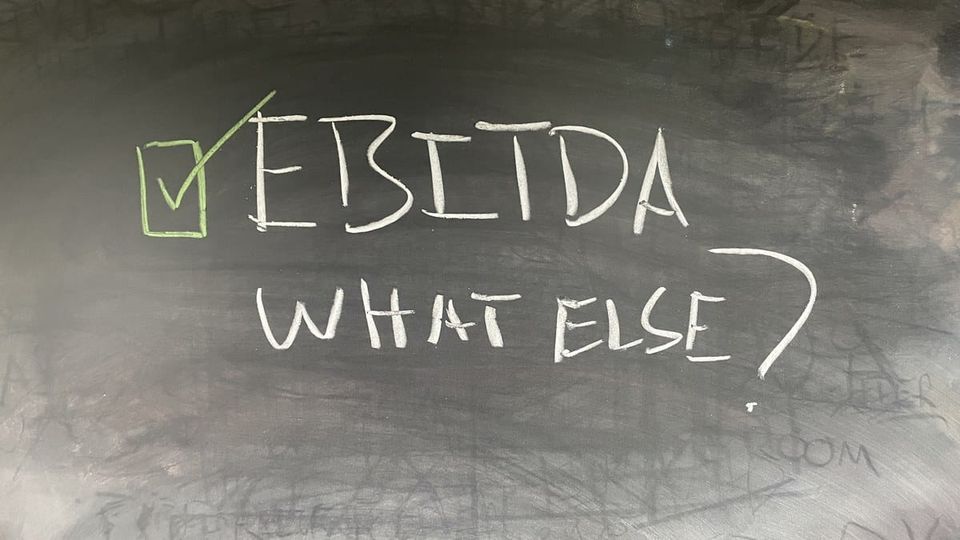
The deal looks great on paper. EBITDA is clean. Customer concentration is reasonable. The cap table is simple. Working capital is healthy. The QofE confirms the numbers. The legal review surfaces nothing that gives anybody pause. The market is growing. The competitive set is mapped. The retention metrics are inside the band. The acquirer pays nine times trailing for a company doing twelve million in EBITDA and the board signs off.
Eighteen months later the EBITDA has collapsed to seven million.
The acquirer goes back through the diligence file looking for what they missed. The numbers were the numbers. The market is still the market. Customer churn ticked up but not catastrophically. Nothing in the financial diligence file would have predicted what happened.
What happened is that the founder was the company. Nobody on the diligence team had a way to assess that, so nobody did. The directors looked competent in the management presentation. They were competent in the management presentation because the founder had prepared them for the management presentation. The actual operating cadence ran through the founder's office every day, and when the founder transitioned out at the eighteen-month earnout milestone, the cadence collapsed.
That is the most expensive thing financial due diligence misses. It is also the thing that comes up in almost every conversation I have with PE operators who have been around long enough to have stories. The constraint has a name. I call it leadership depth hidden from acquirers.
This article is about what should be diligenced and almost never is. It is also about what you should be doing as a founder if you are eighteen to thirty-six months from a sale process and you do not want your earnout to evaporate.
What financial due diligence actually looks at
Financial due diligence is excellent at what it does. The QofE walks the trailing twelve months of EBITDA and adjusts it for one-time items, owner add-backs, and accounting choices. The financial review confirms the balance sheet, working capital position, and capex trajectory. The commercial review looks at customer concentration, contract structure, churn, NPS, and retention cohorts. The legal review covers contracts, IP, employment matters, and litigation exposure. The tech and ops review looks at systems, infrastructure, and scalability.
All of this matters. None of this tells the acquirer whether the company can actually run without the founder.
The diligence file produces a number. The number is the EBITDA the acquirer is paying a multiple on. The number is real. What the diligence file does not produce is an honest assessment of whether the operating system that produced that number will continue to produce it after the operator changes hands.
That is leadership diligence. Almost nobody runs it. The few firms that do run something they call leadership diligence run it as a culture-and-fit interview, which is not the same thing.
What real leadership diligence would assess
Real leadership diligence would assess five things. None of them show up in the QofE.
Founder dependency. Is the company viable without the founder? Specifically: if the founder were unavailable for ninety days starting tomorrow, what would happen? Which decisions would not get made? Which client relationships would deteriorate? Which deals in progress would stall? Which directors would be unable to execute their function without the founder backing them up? The honest answer to this question, in most companies under fifty million in revenue, is that the founder is more central than anybody on the diligence team is being told.
Director bench depth. Can the second tier actually run their function, or are they good at executing under the founder? There is a real difference. An executor under a strong founder looks competent in a management presentation because the founder has framed the work, set the cadence, and resolved the cross-functional friction. The same executor, without the founder, may not be able to make a clean decision when their function disagrees with another function. Most directors I assess in pre-sale work fall in this category. They are not bad. They have just never been the actual decision maker, and the moment they are required to be, the operating tempo changes.
Decision-making cadence. Are decisions made cleanly, or are they bottlenecked through the founder? You can actually measure this. Sit in the company's standing meetings for a week. Count how many decisions get made in those rooms versus how many get deferred for "let me check with the CEO" or "I'll bring this back next week." A healthy company at this size makes a high percentage of decisions inside the meetings they happen in, by the people whose function owns the decision. An unhealthy company defers everything to the founder. A diligence team can read this in a single week of observation if they are looking. Most are not looking.
Truth-telling culture. Does the team tell the founder hard truths, or is the founder operating on stale or sanitized information? This one is hard to assess from the outside but you can pick up signal. Ask the directors, individually and confidentially, what they have not told the CEO in the last quarter. If you get five executives who all say "nothing important," you have an information problem. Healthy companies have functioning channels for bad news. Unhealthy companies have founders who learn about problems three weeks too late from a customer complaint or a churned employee.
Systems versus heroics. Is the company built on systems, or on the heroic effort of a few key people? Heroic companies look great until the heroes burn out, get poached, or are no longer willing to be heroes after the founder cashes out. Systems companies look less impressive in the management presentation because the work appears boring. The work appears boring because it is repeatable. Repeatable work survives a transition. Heroic work does not.
These five together are the leadership operating system. Either it is functioning at a level that will survive an acquisition, or it is not. The diligence team rarely knows which because nobody is assessing it. This is leadership depth hidden from acquirers, and it is the single biggest source of value destruction in lower-middle-market PE.
The four most expensive misses
In conversations with PE operators about deals that have closed badly, the same four post-close surprises come up again and again.
The founder was the customer relationship. The aquirer assumed the relationships were institutional. They were personal. Three to six months after the founder transitions out, the largest accounts start to drift. The new account manager is competent. The new account manager is not the person the customer trusted for the last seven years. Revenue retention slips inside year one.
The director bench was thinner than presented. The directors looked good in the management meetings. After the founder is gone, decision quality drops. Cross-functional issues that the founder used to broker now sit unresolved. Hiring slows because nobody is willing to make the call alone. The directors are still good people. They are not yet a leadership team that operates without a founder.
The information environment was distorted. Pre-close, everybody told the diligence team the operating story they had been telling each other for years. Post-close, with new ownership and the founder partly out of the picture, employees start telling truths they had been holding. The acquirer learns about morale issues, simmering interpersonal conflicts, customer complaints that never made it to the founder, and product or operational problems that were known by the team but never escalated. None of this was hidden maliciously. It was just never asked for in a way that produced honest answers.
The growth thesis required leadership the company did not have. The investment thesis assumes the company can scale from twenty to fifty million, or fifty to a hundred, in three to five years. That kind of scaling requires a leadership team that can think at the next level, hire above themselves, and run with a different operating cadence. The current leadership team got the company to the current size. They are not necessarily the team that will get it to the next size. The acquirer realizes this twelve to eighteen months in, and now has to either upgrade the team or replace the thesis.
Each of these is in principle assessable before the deal closes. None of them are assessable through financial diligence alone. All of them require sitting with the leadership team in their actual operating rhythm, not in a polished management presentation.
What a pre-acquisition leadership assessment looks like
I have been running operating-system assessments with leadership teams for over a decade. The version below is that same work, compressed and repurposed for a diligence context. It is the assessment I want to be running for one PE firm, across their entire portfolio and their pipeline of acquisition targets. Two days, on-site, no slides.
Day one is observation. You sit in the standing meetings the leadership team would have run anyway. You are not asking questions. You are watching. How are decisions made. Who speaks first. Who defers to whom. Who has standing to disagree with the founder and who does not. What gets escalated and what gets resolved at the table. How prepared are the directors for the meeting. How does the founder behave when somebody brings bad news. How does the team behave when the founder is brought a bad number.
Day two is direct work with the leadership team. You run the constraint exercise. Each director surfaces the constraint that is currently bottlenecking their function. You rate them. You assess them. The exercise is a normal part of the operating cadence I install with healthy companies. Used in diligence, it surfaces the leadership truth in about four hours. You learn who can think clearly under pressure. You learn who deflects. You learn who has been carrying a constraint they have not been able to name in front of the team. You learn whether the leadership team can have a hard conversation with each other in a room.
At the end of day two, the output is a leadership operating system assessment. It is not a yes or no on the deal. It is a structured read of the five questions above, plus specific recommendations for what would need to change post-close to protect the investment thesis. Some companies pass cleanly. Most have one or two real risks the acquirer should know about. A few have systemic issues that, once surfaced, change the price or the structure of the deal.
This product does not exist in the standard PE diligence workflow. It should. If you are a PE managing partner reading this and the gap I am describing matches a hole in your process, that is the conversation I am here to have.
What this means if you are the founder
If you are reading this as a founder twelve to thirty-six months from a sale process, the takeaway is direct. The acquirer is going to find out about your leadership operating system either way. The only question is whether they find out before the deal or after.
If they find out before the deal, you can fix the things that are fixable, transparently negotiate around the things that are not, and price the deal honestly. If they find out after the deal, the things that are wrong show up as a price collapse in your earnout. You will pay for the leadership weakness either way. The choice is whether you pay for it on the front end with effort or on the back end with money.
The work, if you are eighteen to thirty-six months out, is to install a leadership operating system that holds without you. Specifically: directors who actually own their functions and can disagree with you in a meeting. A decision-making cadence that does not bottleneck through your office. An information environment where bad news travels up faster than it travels sideways. Systems that produce repeatable outcomes without requiring a hero. A bench of leaders who are visibly capable of running things if you walked away tomorrow.
This is not the work of a quarter. This is the work of two to three years of intentional leadership operating system installation. The earlier you start, the better the outcome at the table.
What to do with this
If you are an acquirer and you have been doing diligence the standard way, your next deal should include a two-day leadership operating system assessment alongside the QofE. Make it part of the standard package. The cost is rounding error against the deal size. The value, when it surfaces a real risk, is the difference between a deal that holds and a deal that collapses inside two years.
If you are a founder twelve to thirty-six months from a sale or a major capital event, the work to install a leadership operating system that holds without you is the highest-leverage investment of your remaining time as the operator. Not the marketing. Not the next product launch. Not even the customer expansion. The leadership operating system, because it is what protects everything else from evaporating after you transition.
So much respect.
---
Frequently asked questions
Q: What does financial due diligence miss in PE acquisitions? A: It misses leadership depth. The QofE confirms the EBITDA. The commercial review confirms the customer base. Neither tells the acquirer whether the operating system that produced those numbers can run without the founder. That gap is where most lower-middle-market deals lose value after close.
Q: What is a pre-acquisition leadership assessment? A: A two-day structured observation and exercise designed to read the target company's leadership operating system before the deal closes. Day one is observation in the leadership team's standing meetings. Day two is a constraint exercise with the directors. The output is a structured read on founder dependency, bench depth, decision-making cadence, truth-telling culture, and systems versus heroics.
Q: Why do so many PE deals lose value within eighteen months of close? A: Four post-close surprises show up again and again. The founder was the customer relationship and the relationships didn't transfer. The director bench was thinner than the management presentation suggested. The information environment was distorted and employees started telling truths post-close that were held pre-close. And the growth thesis required leadership the company did not have. All four are leadership operating system issues that financial diligence cannot see.
Q: How does a founder prepare a company for a sale eighteen to thirty-six months out? A: Install a leadership operating system that holds without you. Directors who own their functions and can disagree with you. A decision-making cadence that does not bottleneck through your office. An information environment where bad news travels up faster than sideways. Systems that produce repeatable outcomes without heroes. A visible bench of leaders capable of running things if you walked away tomorrow. This takes two to three years of intentional work, not a quarter.