
Web3 Has a Brand Story Problem
I have done brand work in a lot of categories. Architecture firms. Renovation companies. Talent agencies. Catholic media. Supplements. Real estate. B2B SaaS. Music tech. Nonprofits across multiple verticals.
And web3.
Web3 is the only category I have worked in where the brand story problem is structural, not just situational. Every other industry has good brand stories and bad brand stories scattered across companies that look otherwise similar. Web3 has a problem at the level of the category itself.
I want to talk about it because the diagnosis applies far beyond web3. Whatever industry you are in, if you have ever built a company around something technical and watched the messaging fail to land, this article is for you. Web3 is the extreme case. The lesson is general. The constraint underneath is story disconnected from customer reality.
What I have seen
I have done JTBD framework work with a web3 art tokenization company. I have done KOL audience strategy with a web3 social platform. I have read the websites, decks, and white papers of dozens more web3 companies that I was not formally engaged with.
Almost every one of them has the same problem.
The website opens with the technology. The deck opens with the technology. The pitch opens with the technology. The Twitter account, sorry, the X account, posts about the technology. The community channels are mostly technical discussion of the technology. The founder's personal feed is also about the technology. The team is hired against the technology. The metrics that get measured are technology metrics.
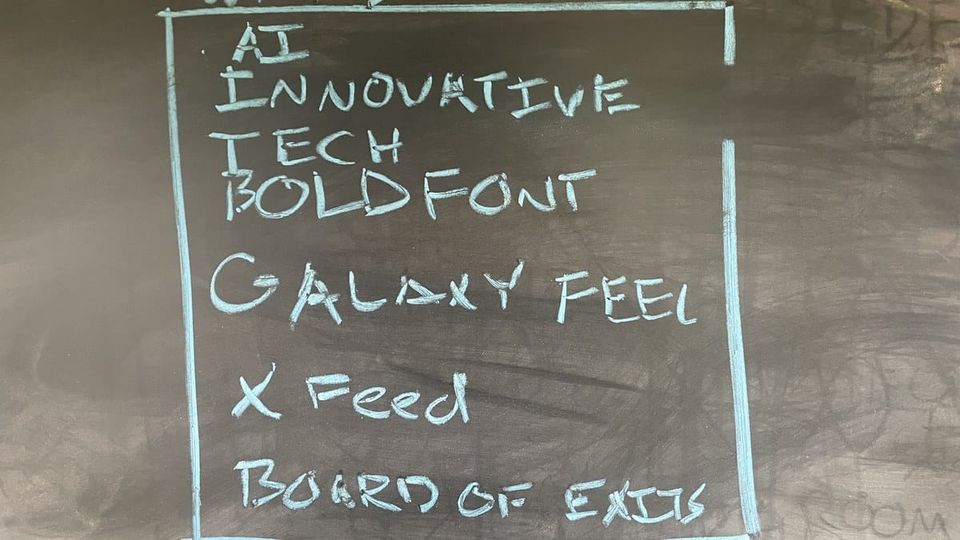
I mean fuck, is there a web3 starter brand kit that everyone uses? Can someone launch a web3 company without a Universe matrix black background website?
And then somebody inside the company says, with concern, that the messaging is not landing with mainstream users.
I want to suggest that the messaging not landing with mainstream users is not a messaging problem. It is the predicted consequence of a brand built entirely on the technology and not on the people the technology is for.
Why web3 specifically
There is a reason this happens worse in web3 than almost anywhere else.
Web3 founders are usually technical. They came to the category because the technology fascinated them. They built early relationships with other people who were also fascinated by the technology. They raised money from investors who were either also technical or who were trying to look technical because the category rewarded that.
Then they tried to bring a product to market.
The market they were trying to bring it to, the actual customers, the real humans on the other end of the value proposition, were almost never as fascinated by the technology as the company was. The customers had jobs to do, lives to live, problems to solve. The technology was, at best, a tool. At worst, a barrier.
The brand story should have been about the lives. It was about the technology.
This is the same error you see in B2B SaaS, supplements, deep tech, biotech, and a lot of other technology-forward catagories. Web3 just has it in concentrated form, because the category is more technical than most and the founder profile leans more technical than most. The error is the same.
The two companies I worked with
The art tokenization company I worked with was building blockchain authentication for high-end art. Real product, real problem, real technology. I have written about that engagement elsewhere as a JTBD case study, so I will not repeat the framework here. The short version is that their customers were not buying authentication technology. They were buying legitimacy in a market that had historically excluded them. The product was the same. The story they needed was different.
The other web3 client was a survey and polling platform. The pitch was authenticated identity on the blockchain, immutable answers, transparent provenance. The actual product was solving the problem that everybody buying survey or polling data has been quietly worrying about for the last five years. The data is contaminated. Bots fill out surveys. Incentivized respondents lie. The same person answers the same poll through three different panels. Polling and survey buyers, the brands running consumer research, the political operations buying public opinion data, the academics publishing on it, all of them have a growing trust problem with the data they are paying for.
The customer for this platform was not crypto-native. It was the chief marketing officer at a Fortune 500 brand who needs to know whether the survey informing the next product launch is real. It was the political research firm whose entire credibility rests on the data being clean. It was the academic institution whose journal article will be cited for the next decade.
The product positioning led with the technology and the crypto-native vocabulary. The customer the product was actually for had to translate every piece of marketing copy into their own language to figure out whether the product would do what they needed. Most of them did not bother. They went somewhere else, or they kept doing what they were doing, badly, with tools designed for a different problem.
The brand story problem cost them customers. The customers did not say "your messaging is unclear." The customers just stopped responding to outreach. The cost of label-first messaging is rarely visible as a complaint. It shows up as silence.
Why this is a brand story problem, not a marketing problem
If you read the above and your reaction is "they need better marketing copy," I would gently push back.
Marketing copy is downstream of brand story. Brand story is downstream of clarity about who the customer is and what life they are trying to build. If the upstream layer is wrong, no amount of copywriting fixes the downstream output. You can hire the best web3 marketing agency in the world. They are still going to write copy aimed at a customer who does not exist, because that is who the company has been describing to them.
This is the constraint I see in almost every brand engagement, web3 or otherwise. Story disconnected from customer reality. The team thinks the problem is messaging. The actual problem is upstream of messaging. The team has fallen in love with the product and forgotten to fall in love with the customer.
You cannot write your way out of an unclear understanding of your customer. You can only write your way out of a clear understanding of your customer.
If you do not know who your customer is, in the deep sense of who they are trying to become, your copy will land like every other web3 site. Token-first. Tech-first. Community-first. Customer-last.
What this means for you if you are not in web3
You are reading this and thinking, fine, web3 has a problem, what does this have to do with my company.
The answer is that the web3 pattern shows up in any company where the founders are technical, the product is technical, or the team has been together long enough that they have started speaking their own language. It shows up in any company where strategy meetings spend more time on the product than on the customer. It shows up in any company where the homepage hero section is about what the company does instead of who the customer is becoming.
Look at your own homepage. Read it as if you were the customer your sales team is trying to land tomorrow. Did you understand what your life would look like if you bought this product? Or did you have to do all the translation work yourself?
Most companies have to do the translation work for the customer. Most companies do not. Most companies, like the web3 companies I have looked at, lose the customer at exactly that gap.
The constraint is not web3. The constraint is loving the product more than you love the customer. Web3 just makes it easy to see, because the technology is so dominant and the customer is so abstract.
In your industry it might be quieter. It might be your industry jargon, your founder's personal favorite topic, your engineering team's pet project, your CFO's favorite KPI. Whatever the equivalent is, it is in your messaging right now, and it is doing what the technology is doing for web3 companies. It is taking up the room your customer's life should be taking up.
What to do with this
Find one brand asset of yours. Homepage. About page. Investor deck. Sales one-pager.
Cross out every sentence that is about you or about your product.
Read what is left.
If there is anything left, you are doing better than most companies. If there is almost nothing left, you have just diagnosed the problem.
Rewrite that asset starting from your customer's life and working backward to the product. The product comes in late, as proof. The customer comes in early, as the subject.
This is the move. It is harder than it sounds. It is also the difference between brands customers find their way to and brands customers walk past.
Web3 doesn't have a unique problem. Web3 has the most visible version of a problem most companies have. Look at your version of it.
So much respect.
---
Frequently asked questions
Q: Why do web3 companies struggle with brand and marketing? A: Because the brand is built on the technology, not on the customer. Web3 founders are usually technical, they came to the category because the tech fascinated them, and the team, the deck, the website, and the community all reflect that. The customers they are trying to reach are almost never as fascinated by the technology as the company is. The customer's life is what the brand story should be about. The technology is what it ends up being about. That gap shows up as silence, not complaint.
Q: What is "story disconnected from customer reality"? A: It's the constraint where a company's brand story describes the product, the technology, or the team's worldview, instead of describing who the customer is trying to become. The fix is not better marketing copy. The fix is upstream: clarity about the customer's life. Without that upstream clarity, no amount of downstream copywriting will land.
Q: How do you position a technical product without sounding too technical? A: Start with the customer's life and work backward to the product. The product comes in late, as proof. The customer comes in early, as the subject. Cross out every sentence on your homepage, deck, or one-pager that is about you or your product. Whatever is left is the actual brand surface. For most technical companies, almost nothing is left, and that's the diagnosis.
Q: Why isn't better marketing copy enough to fix a brand story problem? A: Marketing copy is downstream of brand story. Brand story is downstream of clarity about the customer. If the upstream layer is wrong, the agency you hire will write beautiful copy aimed at a customer who doesn't exist, because that is who the company has been describing to them. The work has to start upstream of the copy.
Q: Does this brand story problem only apply to web3 companies? A: No. Web3 is the most visible version of a pattern that shows up in any company where the founders are technical, the product is technical, or the team has been together long enough to develop its own internal language. B2B SaaS, supplements, deep tech, biotech, and any industry-jargon-heavy category all have a version of it. The constraint is loving the product more than you love the customer. Web3 just makes it easy to see.