Your Vision Is Not Landing. Here's Why.
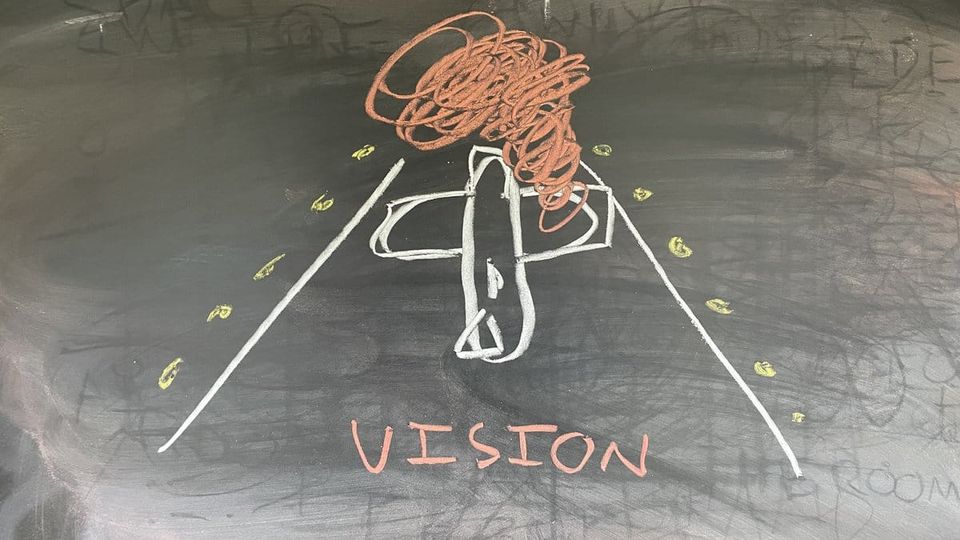
You have said it clearly. Multiple times. In multiple formats. All-hands presentations, leadership offsite decks, one-on-one conversations with your director team, written documents. You have communicated the vision of this company more times than you can count, and the evidence in front of you is that it has not landed.
The projects are still being run in the direction of the old version of the company. The decisions being made at the director level still reflect last year's priorities. The team members closest to the work are still optimizing for the metrics that were relevant before the vision shifted.
You have communicated the vision. The vision is not in the organization. These are two different problems. The gap between the vision being communicated and the vision being operational is not a communication gap. It is a translation gap. This is the constraint I call vision not operational.
The difference between communication and translation
Communication delivers the vision. Translation installs it.
Communication is what happens in the all-hands. The slides are clear. The logic is sound. Everyone nods. The meeting ends. Three weeks later, the behavior in the organization has not materially changed.
Translation is the working session where the leader and the team work through specific questions: given this vision, what does our decision-making process look like differently? Which of the things we are currently doing no longer belong? Most leaders do the first and skip the second.
Why vision fails at the director level
Ambiguity about trade-offs. A vision statement tells the team what the company is moving toward. It does not tell them what the company is moving away from. And the what-we-are-moving-away-from is often the information that actually changes behavior.
The absence of visible leader behavior change. The team is watching whether the leader is making decisions that reflect the vision or the previous operating mode. The behavior is more authoritative than the slide.
The lack of a mechanism for the team to raise conflicts. Without a regular forum where the director team can surface tensions between the vision and existing commitments, those conflicts get resolved locally, inconsistently, and in ways that often default back to the previous operating mode.
The metrics problem
Vision without metric change is decoration. If the company's measurement system is still tracking the things it tracked before the vision shifted, the people in the organization are being measured on performance in the direction of the old vision.
Operationalizing a vision requires identifying the two or three metrics that would tell the organization the vision is being lived. Not twenty metrics. Two or three. The ones that, if they were moving in the right direction, would be direct evidence that the vision is becoming real.
Why leaders resist operationalizing vision
Abstract vision cannot fail. Specific vision can. The resistance to operationalizing is often, at its root, a resistance to accountability. The leader who has been running a compelling vision that has not been made specific is protected from the uncomfortable discovery that the vision, when tested against operational reality, may require changes the leader is not yet ready to make.
What to do with this
Pick the most important element of your current organizational vision. Write down three behaviors that would be different in the organization if that element were genuinely operational. Not attitudes. Behaviors. Specific, observable things someone walking through your office would see on a Tuesday.
For the ones that are not happening, write down one specific change, in metric, decision authority, or process, that would make the behavior more likely to happen within thirty days.
One element. Three behaviors. One change each. Four weeks.
The vision lands one operationalized element at a time, not in the all-hands where it was first described.
So much respect.