In a Red Ocean, Your Brand Story Is Your Only Moat
Saurav Gupta runs a B2B SaaS company called Sales Robot.
The category he is in is one of the most crowded in software. AI-assisted sales outreach, sequence management, prospecting tools. There are dozens of well-funded competitors. Most of them ship the same features within ninety days of each other. Most of them write the same homepage copy.
When Saurav and I talked, the diagnosis was simple. He was building a real product in a category where buyers could not tell competitors apart at a glance. The product was good. The category was crowded. The brand story was the only thing that could break the tie.
Most founders in red oceans do not believe this. They believe they will win on features, or pricing, or the next funding round. They will not. The features get copied. The pricing gets matched. The funding rounds equalize. The partnerships diffuse.
The brand story is the only asset that does not commodify. It is also the asset most founders in red oceans neglect the longest.
What a red ocean actually is
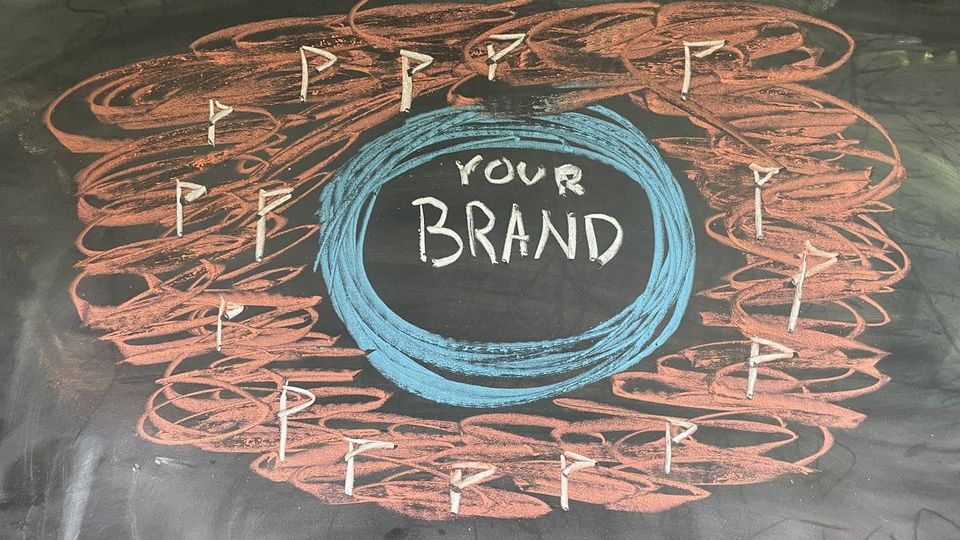
A red ocean is a market where the competitive set is large, the products are functionally similar, the buying signals are saturated, and the differentiators that worked five years ago no longer work. Sales tooling is a red ocean. CRMs are a red ocean. Most flavors of consulting are red oceans.
If your customers can name three to five companies that look pretty similar to yours and they cannot articulate, in one sentence, what makes you different, you are in a red ocean. Whether you have admitted it to yourself or not.
Why features stop working
In a blue ocean, when you launch a feature, you create separation. In a red ocean, when you launch a feature, you create parity. Within ninety to one hundred eighty days, two or three competitors will have shipped the same feature.
What does not commodify, what cannot be copied at any speed, what compounds over time and becomes more valuable the longer you maintain it, is your brand story. The brand story is the version of you that lives in the minds of buyers when you are not in the room. This impression cannot be copied. Once you have it, no competitor can take it from you.
That is what a moat is.
What most founders in red oceans do instead
Most founders react to competitive pressure by going harder on features, pricing, and short-term acquisition. The whole category gets louder. What does not happen is differentiation. Everyone is racing along the same axis.
The way out is not to race faster. The way out is to step off the axis. The brand story is that other axis. And story disconnected from customer reality is the most common reason companies lose deals they should have won in crowded categories.
The diagnostic
Imagine your customer just said yes to one of your competitors. Imagine you are interviewing them three months in. If the answer is anything along the lines of we did not really see the difference between you, you have a brand story problem.
Coins do not flip in your favor when you have a strong brand story. Coins do not get flipped at all. The buyer has already decided.
This applies to nonprofits too
If you run a nonprofit at five to fifty million in giving, you are also in a red ocean. Your major donors cannot tell you apart based on impact metrics, financials, or board prestige. The thing that decides which organization gets the seven-figure pledge is your brand story.
What to do with this
Pick three direct competitors. Open their websites side by side with yours. Now imagine you are a buyer who has never heard of any of you. Try to articulate, in one sentence each, what is different about each company including yours.
Most founders cannot do this for their own company in a way that meaningfully differentates from the others. If you cannot write a one-sentence differentiator for yourself that nobody else in the red ocean could write about themselves, you do not have a moat. You have a product. The product will get copied. You need a moat.
Build it. The moat is the brand story. The brand story is the only thing in your category that compounds.
So much respect.