The Real Reason You Can't Delegate
Every leadership book written in the last thirty years tells you to delegate more. You have heard it. You have agreed with it. You may be struggling to actually it.
One of the main reasons is confrontation. You cannot delegate because you cannot confront. Those two things are connected in a way most leaders have never thought about explicitly. Once you see the connection, the delegation problem stops being about process. It is the conflict avoidance constraint, and it is running your organization more than your strategy is.
The delegation-confrontation link
The moment you hand something off, you create a new problem. Not an operational problem. A relational one. Because now someone on your team owns a piece of work. And that piece of work might not come back the way you needed it to. And when it does not, you have to say something.
Think about the last time you pulled something back from a team member and just did it yourself. You were not protecting them. You were protecting yourself from the conversation that would have happened if they had done it wrong.
A founder said something to me that I have heard versions of a hundred times since. I know I need to delegate more, but the problem is I would have to confront that person when the task is not done right. And I do not know how to do that without it becoming a whole thing.
The whole thing. That is the part you avoid. Not the task being done wrong. The conversation after.
What avoidance looks like in a leadership context
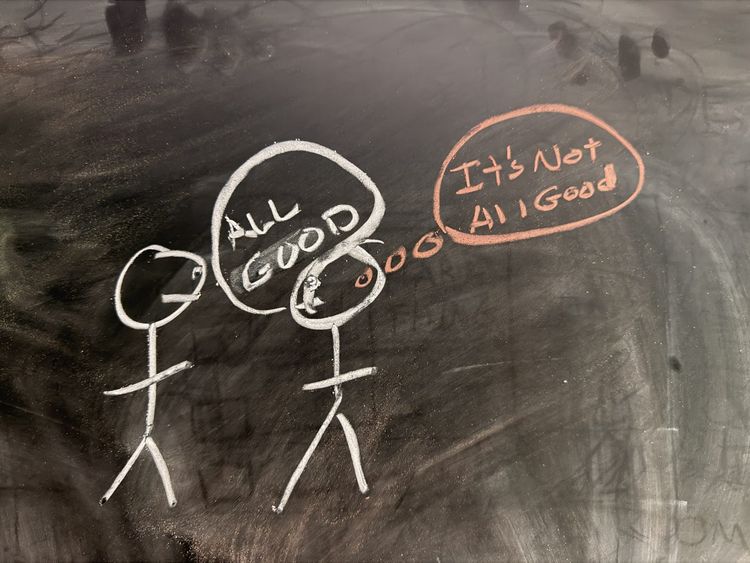
Conflict avoidance is not dramatic. It does not usually look like avoidance. It looks like reasonableness. It looks like giving feedback so buried in positives that the person has no idea there is a problem. It looks like reassigning the work without ever explaining why.
The cost is invisible at first. One underperformer stays too long. One missed deadline does not get a real conversation. None of it feels catastrophic. It just accumulates. At some point the accumulation is your organizational culture.
The four patterns
Fight. The leader escalates. The directness is real, but the delivery makes it feel like an attack. The team learns to wait for the storm to pass rather than actually engage.
Flight. When something is off, they get busy. Suddenly there is a trip, a deadline, a priority that pulls them out of the conversation they should be having.
Freeze. The leader knows there is a problem, knows they need to say something, and cannot make themselves do it. The conversation is scheduled and then rescheduled.
Fawn. The leader resolves conflict by becoming incredibly agreeable. Finds a way to explain away the problem through accomodation and rationalization.
Most leaders reading this have recognized themselves in at least two of those.
What the company pays
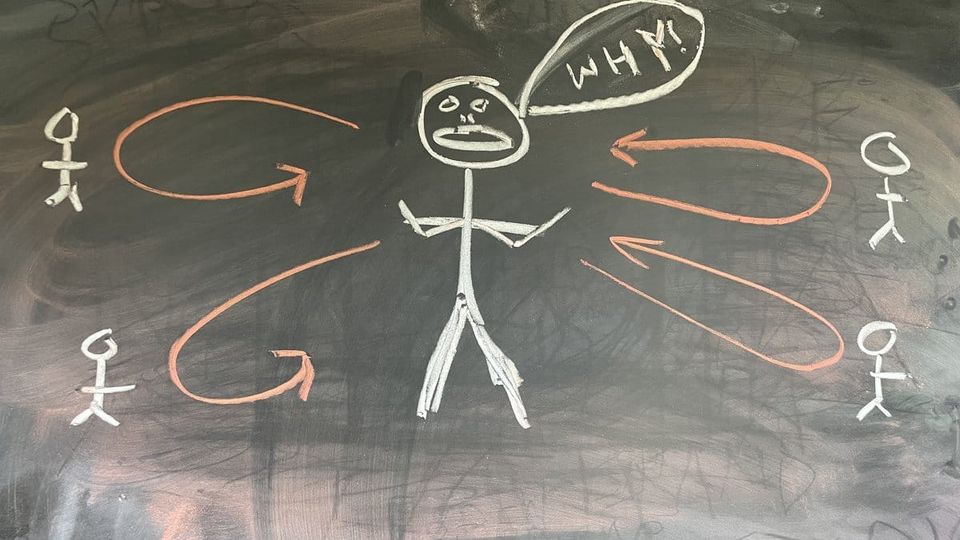
When you cannot confront, the company reorganizes itself around that fact. You become the constraint. Not because you lack capability. Because conflict avoidance makes you the central node every decision has to pass through.
The leaders who have figured this out are not comfortable with confrontation. Nobody is. They are just willing to be uncomfortable. Not skill. Not confidence. Willingness to sit in the discomfort of saying what is true to the person who needs to hear it, and staying in the room while they process it.
What this looks like for nonprofits
The people who gave their career to your organization deserve accurate information about how their work is landing. Protecting them from that is not kindness. It is a failure of leadership.
What good confrontation looks like
Good confrontation is specific. Not your work has been slipping but the last three client reports came back without the competitive analysis section. It is about behavior, not character. It focuses on what changes, not on what went wrong.
I love this quote: "When it is my fault, it is my circumstance. When it is your fault, it is your character." This is not true, obviously. But it is how we see and judge the world.
When it comes to delegation, we often vilify or degrade someone's character for not performing to our expectations when the root problem is a character flaw of our own. We avoid confrontation and therefore do not coach, train, and empower the employees around us.
And it ends with a question. An actual question. What do you need from me to make that change? What is getting in the way? The question keeps both of you in the room.
But before we end this section, I should probably explain what good confrontation actually looks like in practice. Because saying "be specific" and "ask a question" is the easy part.
Good confrontation does not mean easy. Personalities and egos are always at play. Some people are easy to give constructive criticism to. Some people are not. The discomfort never fully goes away, you just get better at moving through it.
For the actual mechanics, I lean heavily on the principles from Crucial Conversations and Crucial Accountability by Kerry Patterson, Joseph Grenny, Ron McMillan, and Al Switzler. If you have not read them, do. They are the closest thing I have found to a real operating manual for these moments.
A few of their principles I come back to constantly:
- Start with heart. Get clear on what you actually want out of the conversation, for yourself, for the other person, and for the relationship. If you walk in wanting to win, you have already lost.
- Make it safe. People cannot hear hard feedback when they feel attacked. Establish mutual respect and shared purpose before you get to the hard part. Safety is not softness. It is the condition that lets the truth land.
- Master your story. The version of events you walked in with is a story you told yourself. Separate the facts from the interpretation before you open your mouth.
- STATE your path. Share the facts, tell your story, ask for theirs, talk tentatively, encourage testing. You are not delivering a verdict. You are starting a dialogue.
- Move to action. End with clarity. Who does what by when. A conversation without a decision is just venting with extra steps.
You will not do all five well the first time. You will probably not do them all well the tenth time. That is fine. The point is to have a framework you can come back to when the emotion starts pulling you off course.
The last piece of advice I would give is to create a culture of feedback. This is critical for an organization to prepare for scale. I love the ideas of fail fast and permission to make mistakes. As the leader of a team or company, one of the greatest investments you can make into culture is creating space for people to rally around looking for inefficiencies within themselves, the systems, and the people they manage.
Then identifying constraints and identifying inefficiencies no longer becomes taboo. It becomes the puzzle pieces everyone in the company is trying to solve every day.
Last but not least, one of the greatest steps you can take is to follow the advice, "Hire slow, fire fast." Some people, unfortunately, are simply toxic. For whatever reason, there is no reasoning with them, and they disrupt the culture. They translate all things within their environment as attacks on them. These individuals often slip through the hiring process. They come in charming and agreeable. But the moment you discover they are not willing to grow personally, get them out. Immediately.
What to do with this
This week, write down the name of one person on your team you have been managing around instead of managing directly. Write down the one thing you need that person to understand that you have not said clearly. One sentence. Schedule the conversation.
Every piece of work you are carrying that belongs to someone else is a delegation decision waiting for a confrontation you have not had yet. Clear that one. Then the next.
The team you want is on the other side of those conversations.
So much respect.