The Dinner Table
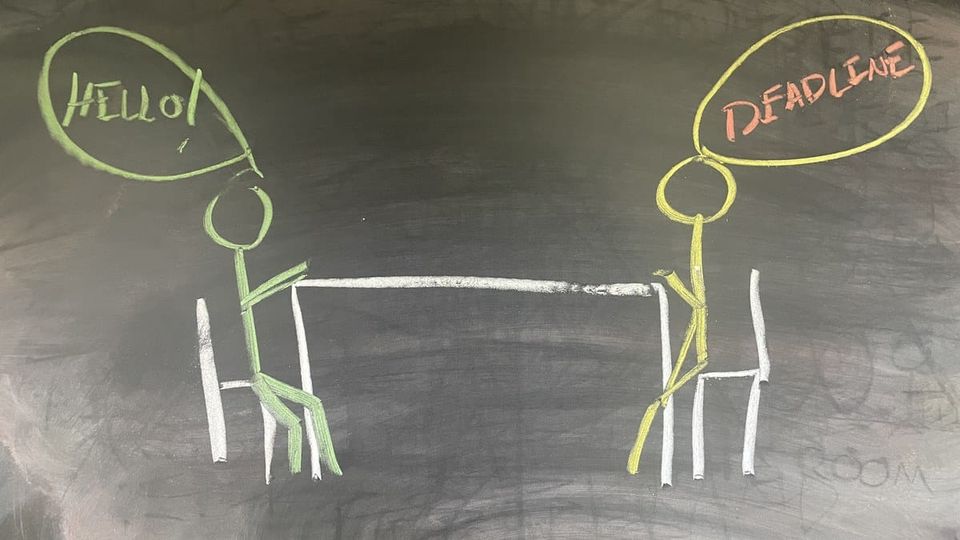
I was sitting at the dinner table thinking about work.
Not in some abstract way. Specifically. I was thinking about a due date. The strategic plan. The conversation I needed to have with a director on Monday. The thing I had not finished. The thing somebody had said in a meeting earlier that day that was still bothering me.
The food in front of me had been put there by somebody I love. The conversation happening around me involved people I love. My body was at the table. The part of me that mattered was somewhere else entirely. The me that was supposed to be home was a thinner version of me. A me on a thirty percent power setting.
This happens to most leaders. It happened to me for years. It is the constraint I call presence deficit, and it costs more than anybody who has it can see while they have it.
You can't perform presence
For a long time I thought I was a present person.
I made eye contact in meetings. I asked good questions. I remembered names and details. By the standards of the professional world, I was paying attention. By the standards I had set for myself, I was crushing it.
Then I started to notice that the people closest to me did not experience me the way the professional world did.
They could tell when I was scrolling something behind my eyes. They could not always articulate it. They would not have used those words. They just went a little quieter. They stopped reaching toward me at the moments I was supposed to be most available. They started giving the texture of their day to whoever was actually there to receive it, instead of to me.
You learn fast or you lose the relationship. I learned slowly.
What I figured out at the table
Here is what nobody tells you about thinking.
Not thinking about something is the best way to actually solve it. Life is funny like that.
The problem I was sitting at dinner trying to think through was not going to be solved at dinner. It was not even going to be solved at the desk the next morning. It was going to be solved in the moments when my brain was busy enough with something else that the problem was forced to work itself out in the background.
I had been doing the opposite. I had been keeping every open loop running in the foreground at all times, including at dinner, including at bedtime, including on walks. Including in conversations with the people in my life. I thought that was diligence. I thought that was what high-performing leaders did. I thought you held the work in your head so the work would not slip.
The work was not slipping. The work was iterating poorly because the only mode I had for the work was the desk-mode, the meeting-mode, the chatter-mode. The deeper mode, the one where the actual solutions live, only switches on when you let go.
The dinner table was not a break from solving the problem. The dinner table was the place the problem could have been solving itself, if I had let it.
I was sabotaging both. The relationship and the work. Same act.
From the dinner table to the board room
Here is the part most leaders miss.
The thing that was happening at my dinner table was the same thing that was happening in my board room. Same nervous system. Same simulated attention. Same cost. The only difference was who was in the chair across from me and what they were able to articulate about what they were experiencing.
At the dinner table, the people across from me could feel I was gone but could not always name it. So they adjusted. They got quieter. They stopped offering the texture.
In the board room, the people across from me could feel I was gone but were paid not to name it. So they adjusted. They got more efficient. They stopped offering the texture.
The behavior looked completely different. The mechanism was identical. I had trained both rooms to bring me the version of themselves that did not require my full presence, because my full presence was not available.
The dinner table is the room where you find out you have the problem. The board room is the room where the problem costs you the most.
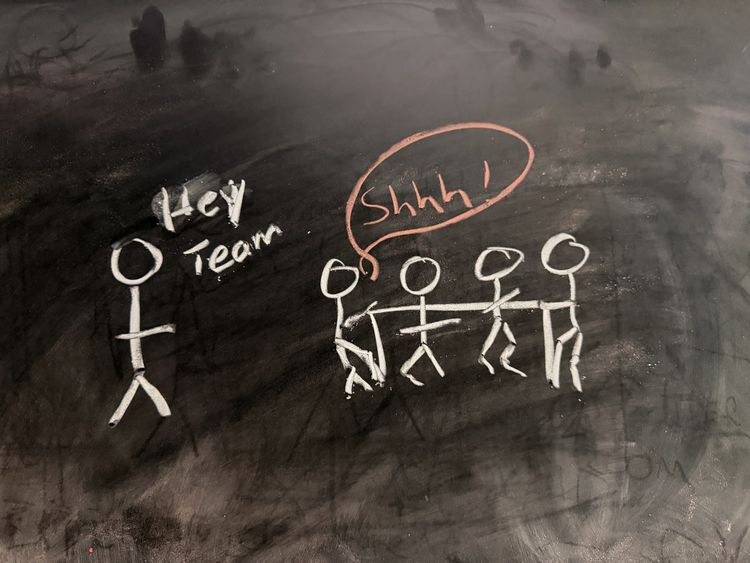
Your leadership team has this problem too
Your director walks into your office with something on her mind.
You are at your desk. The laptop is open. There are three Slack messages and a Teams notification visible from where she's standing. You spin your chair toward her. You make eye contact. You ask her what's up.
She tells you. You nod. You say things that sound like a response.
Then she leaves. Half an hour later, you can't remember exactly what she said. You remember the shape of it. You remember the headline. You do not remember the texture, the hesitation, the sigh between two of her sentences, the thing she almost said and didn't.
She remembers all of it. She also remembers that you were not actually there. She has filed that information. She files it every time. After enough filings, she stops bringing the hard things to you. She brings only the headline. She handles the texture by herself.
You wonder why your team doesn't tell you what's really going on. You are simulating attention, the way I used to simulate attention, and the people around you have stopped trusting it.
Presence is the constraint nobody talks about
I run a workshop called Radical Presence. I named it that because radical is the only word that fits.
Presence is not soft. Presence is not a wellness module bolted on to the real work. Presence is the prerequisite for any real work. If you are not present, your strategic plan is decoration. Your one-on-ones are theater. Your offsites are expensive theater with a hotel bill.
If you are present, ordinary tools become powerful. A fifteen-minute conversation produces what a ninety-minute meeting can't. A walk produces what a powerpoint can't. A three-word question produces what a hundred-page doc can't.
The work people pay me for is mostly teaching them to do something they already know how to do, that they have stopped doing because their attention has been hijacked by twenty years of professional habits designed to look like attention without being attention.
The problem you cannot solve at the desk is the one the desk keeps you from solving. Presence deficit is what holds you at the desk after you have already left it.
What to do with this
Tonight when you go home, put the phone in another room.
Not on the table face-down. Not on the counter. Another room. With the door closed.
Have dinner without it. Have the conversation that happens because the phone is gone without it. Notice what happens to your body in the first ten minutes. You are going to feel a low-grade panic. That is the addiction speaking. Sit through it. It passes.
Do this every night for two weeks.
Then do the same experiment in your one on ones at work. Phone out of sight. Laptop closed. Notice what your team starts to say when they realize you are actually listening. Notice what you start to hear that you did not hear before.
Then watch what happens to the work problem you have been carrying. Not at the desk. The morning after. In the shower. On the drive. The solution shows up because you stopped chasing it long enough for your brain to do the part of the work that does not happen in the foreground.
Presence is a muscle. It atrophies in environments that reward simulation. It grows back faster than you think when you stop simulating.
The dinner table is where I learned that.
So much respect.
---
Frequently asked questions
Q: What does it actually mean to be present as a leader? A: It means your attention is fully with the person in front of you, not with the meeting you just left or the one coming up next. Most leaders simulate presence well enough to fool other professionals but not well enough to fool the people who depend on them most. Real presence is single-channel. No second screen running. The people around you can feel the difference even when they can't articulate it.
Q: How do you stop thinking about work at home? A: Not by trying harder to stop. The brain does not respond well to direct commands to disengage. What works is replacing the work-thinking with full engagement in what is actually in front of you. Phone in another room. Real conversation. Real food. Real eye contact. Counterintuitively, the work problems you stop chasing at the table tend to solve themselves in the background, because the brain's deeper problem-solving mode only switches on when the foreground is busy with something else.
Q: What is presence deficit and how does it show up in a team? A: Presence deficit is the constraint where a leader appears engaged but is operating on a fraction of their actual attention. It shows up as a team that has stopped bringing the hard things to the leader. They bring the headline. They handle the texture themselves. The leader wonders why nobody tells them what's really going on. The reason is that the team has stopped trusting that the leader is actually there to receive it.
Q: Why does my team only tell me headlines, not what's really going on? A: Because they have learned, over many small interactions, that you are not fully there to receive the texture. You spin your chair, make eye contact, ask good questions. You also remember the headline of what they said and not the hesitation, the sigh, the thing they almost said. They register that. They file it. After enough filings, they stop offering the parts you cannot receive. You get only what you have demonstrated you can hold.
Q: How do you rebuild attention as a CEO or executive? A: Start with one boundary that forces the muscle to come back online. Phone in another room during dinner. Not on the counter, not face-down. Another room with the door closed. Two weeks of that, every night. Then carry the same boundary into your one on ones at work. The muscle atrophies in environments that reward simulation. It grows back faster than most leaders expect when you stop simulating.