I'm Burned Out and It's Affecting Every Decision I Make
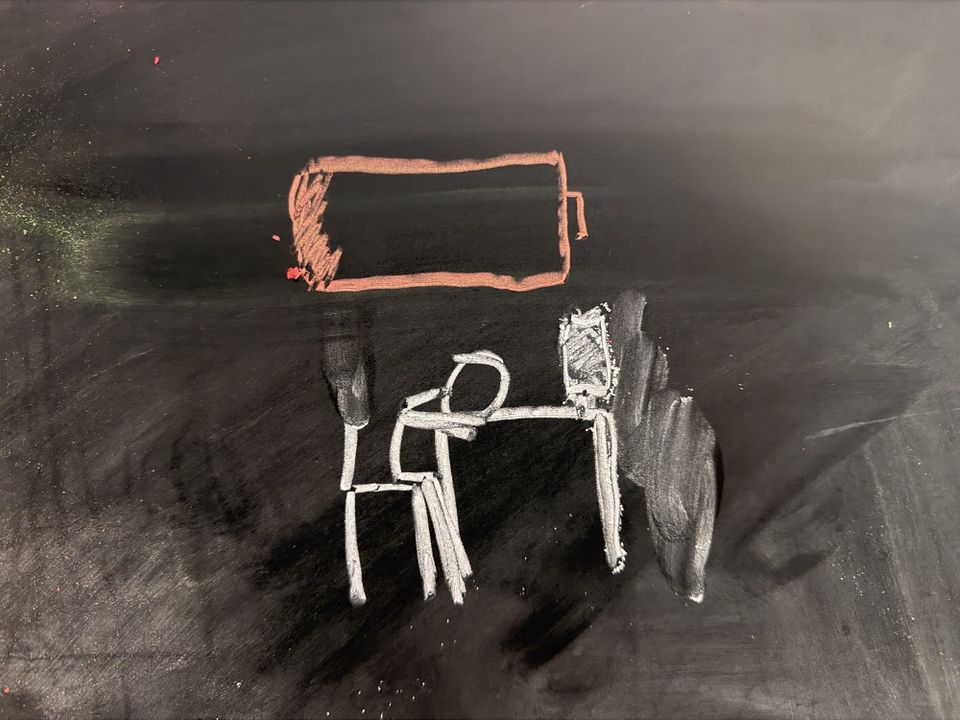
When the CEO is running on empty, the company pays the bill.
Not metaphorically. Literally. In decision quality, in team culture, in the speed and accuracy of the calls being made at the top. The leader who is depleted does not become a worse person. They become a worse processor. And everything downstream of their processing, which is everything of consequence in the company, reflects that.
We treat burnout as a personal issue because the symptoms are personal. The fatigue is in one body. The irritability shows up in one person's interactions. The emotional flatness is one leader's experience. So the conversation about burnout stays in the personal domain. It becomes a conversation about self-care, about boundaries, about vacation days and sleep hygiene.
That conversation is not wrong. It is just not big enough.
The right conversation is about what happens to an organization when its highest-leverage decision-maker is operating at sixty percent capacity. Not what happens to the person. What happens to the company.
That is a business problem. And it deserves to be treated like one.
How does my burnout affect the company's performance?
There is solid research on what happens to human cognition under conditions of sustained fatigue and stress. The executive function degrades first.
Executive function is the cognitive capacity responsible for planning, weighing tradeoffs, managing impulse, and thinking about consequences more than one step out. It is exactly the cognitive capacity a CEO, executive director, or senior leader needs most.
When executive function degrades, the leader becomes more reactive and less responsive. They make decisions faster and with less consideration of second and third-order effects. They default to familiar patterns rather than thinking through novel situations. They have less patience for complexity and ambiguity, which means they resolve complexity and ambiguity by making it simpler than it is.
None of this is visible from outside the room. The leader is still showing up. The calendar is still full. The outputs are still happening. The degradation is subtle. Slightly worse decisions. Slightly less nuanced thinking. Slightly more reactive responses to bad news or difficult people. Slightly less tolerance for the ambiguity that good strategy requires.
Over weeks, those slight degradations compound. The decisions made from a depleted state build on each other. The culture responds to the reactive leader. The team adjusts. The organization calibrates to the sixty-percent version of its leadership and treats that as the baseline.
By the time the depletion becomes visible, it has been the operating reality for months.
How does running on empty change the team around me?
When the leader is running on empty, the team knows before the leader does.
They notice it in the quality of attention they receive in one-on-ones. The meetings that used to feel like genuine dialogue start feeling like check-ins. The leader is present but not fully in the room. They are processing enough to keep the meeting moving but not enough to actually hear what is being said underneath what is being said.
They notice it in the emotional temperature of the leadership team. Depleted leaders have a shorter fuse. Not necessarily explosive. Just thinner. The patience for disagreement compresses. The tolerance for ambiguity drops. The conversations that would have been productive three months ago now have a slight edge that makes people measure their words.
They notice it in how bad news lands. A leader with full executive function can receive bad news, process it, ask the right questions, and move to problem-solving mode in a reasonable sequence. A depleted leader receives bad news and responds first, asks second. The team learns the pattern. It is safer to manage the situation before it gets to the leader than to surface it while the leader is in this state.
The depletion creates the very conditions that make the organization less able to surface and address the problems the leader most needs to know about.
It is a compounding problem. The depletion reduces information quality. Reduced information quality produces worse decisions. Worse decisions produce more fires. More fires produce more depletion.
Why can't I see my own burnout when I'm in it?
The reasons are specific to the identity of high-performing leaders, and they are worth naming directly.
The first reason is that depletion does not feel like depletion from inside it. It feels like having a lot to deal with. The leader is not thinking "I am burned out and my judgment is compromised." They are thinking "there is a lot happening right now and I need to handle it." The busyness and the urgency feel real. They are real. The interpretation of what is causing the feeling, that this is a temporary high-demand period rather than a structural state, is the thing that is wrong.
The second reason is that leaders who built their companies on endurance are not going to identify easily with the idea that they need to stop. The capacity to push through, to outwork the problem, to be the last one standing, is often core to the founder identity. Acknowledging depletion feels like a concession that the identity does not have room for.
The third reason is that the organization is often organized around the leader's availability in ways that make stepping back feel impossible. The leader is in every important meeting. The leader is the escalation path for significant decisions. The leader is the person three different departments are waiting for before they can move. Pulling the leader out of circulation for any meaningful period of time genuinely does create short-term organizational problems. The organization was not built to operate without the leader's continuous involvement. So the leader stays involved. And the depletion deepens.
The fourth reason, and perhaps the most systemic, is that the organizational culture often rewards the depleted version of the leader without knowing it. The leader who is always available, always responsive, always visibly working, is reinforced by a team that interprets availability as investment. The leader who builds recovery into their structure and is sometimes genuinely unavailable is, at least initially, experienced as less committed. The culture has been trained to read constant availability as leadership. That training is wrong, but it is real, and dismantling it requires deliberate communication about why the structure is changing and what the company gains from the change.
Why doesn't a vacation actually fix my burnout?
Most leaders, when they do address depletion, address it with a vacation.
A vacation is not recovery. A vacation is a pause. If you come back to the same conditions that produced the depletion, you will be depleted again within six weeks. The reserach on this is fairly consistent: the cognitive and emotional restoration from a vacation has a half-life of about two weeks under normal conditions. Two to three weeks back into the original environment and the baseline has returned.
Real recovery requires changing something structural. Not adding a vacation. Changing the conditions that are producing the depletion.
For most leaders, those conditions are a combination of three things: too many decisions routed through one person, insufficient recovery embedded into the weekly structure, and a gap between the leader's current role and the leader's actual energy. That last one matters more than it looks. Sometimes the depletion is telling you something about fit, about whether the role you are currently playing in the company is the role you are built to play at this stage.
The structural fix varies. Sometimes it is hiring the person who takes forty hours of work per week off the leader's plate. Sometimes it is building a decision-making structure that genuinely routes lower-stakes decisions to the team without requiring the leader's involvement. Sometimes it is changing what the leader's weeks actually look like at the calendar level, not just in principle but in practice.
The fix is never just rest. Rest without structural change is a reset button that gets pressed and then immediately unpressed.
The best leaders build recovery into their operating rhythm rather than bolting it on after the depletion has already set in. They treat cognitive and emotional recovery the way they treat the financial reserves of the business. Not as a luxury to be deployed when things are comfortable. As a structural asset that determines their capacity to respond when things are not. A leader without recovery reserves is a leader who has to make hard decisions from an already-depleted state. That is the most expensive possible time to be running low.
What causes burnout in nonprofit executive directors?
Executive directors often run the most depleted of any leader category, for reasons that are structural and specific.
The mission creates a moral permission structure for overextension. The work is genuinely important. The need is genuinely real. Saying "I am depleted and I need to step back" in a mission-driven context carries an implicit accusation against the self: if you really cared about the mission, you would push through. So EDs push through. And the mission pays the cost.
The funding model compounds it. Most nonprofits are running lean on administrative capacity. The ED is not just the strategic leader. The ED is often the primary fundraiser, the board manager, the public face, the program overseer, and the organizational crisis manager simultaneously. There is no one to hand these roles to because the budget does not support the staff it would take to distribute them.
The board oversight dynamic adds a final layer. EDs often feel they cannot show depletion to their board because the board is watching for organizational stability and strength. So the depletion goes unreported upward and unaddressed structurally.
The result is an ED who is genuinely sacrificing their health and judgment for the mission, while the mission suffers from the quality of leadership it is receiving. This is not sustainable, and the mission is not being served by it.
How do I tell if burnout is affecting my decisions?
Two exercises. Do both.
First, audit your recovery. For the last thirty days, write down every day where you had at least two consecutive hours with no meetings, no email, no decisions, and no urgency. Not vacation. Just ordinary days with a real break in them. If you have fewer than ten of those days in the last month, your recovery structure is insufficient for the cognitive load of your role. That is a fact, not a judgment.
Second, identify the three decisions you are making every week that you should not be making. Not the decisions that require your judgment. The ones that are being escalated to you because the system routes them to you, not because they genuinely require your specific expertise. Write down the person or process that should be handling each one. Then build the plan to transfer them. Not immediately. In the next thirty days.
The goal is not to reduce your involvement in the company. The goal is to have your involvement concentrated in the places where your specific judgment is actually required, and to have enough cognitive and emotional capacity remaining to apply that judgment well when it matters.
A depleted leader at sixty percent is not a better version than a recovered leader at ninety. The company deserves the ninety percent version. So do you.
Frequently asked questions
How does my burnout affect the company's performance? CEO and executive burnout degrades decision quality before it becomes visible to the organization. Executive function, the cognitive capacity for planning, weighing tradeoffs, and thinking multiple steps ahead, degrades first under sustained fatigue. The result is more reactive decisions, less tolerance for complexity, and a subtle compression of the nuanced thinking that strategy requires. By the time the depletion is obvious, it has been shaping decisions for months.
Why can't I see my own burnout when I'm in it? Depletion does not feel like burnout from inside it. It feels like having a lot to deal with. Leaders who built their companies on endurance are not oriented to interpret a heavy workload as a warning sign. The busyness feels like the job. The identity of being the last one standing makes it difficult to acknowledge that the capacity to sustain the role is structurally compromised.
Why doesn't a vacation actually fix my burnout? A vacation is a pause. Real recovery requires changing the conditions that produced the depletion. Cognitive and emotional restoration from a vacation returns to baseline within two to three weeks back in the original environment. Structural recovery means changing how decisions are routed, what the leader's weekly calendar actually looks like in practice, and whether the role the leader is playing matches their actual capacity and energy.
How does running on empty change the team around me? A depleted leader has a shorter fuse and lower tolerance for ambiguity. The team notices both before the leader does. One-on-ones become check-ins instead of dialogues. Bad news lands harder. Disagreement becomes less safe. The team responds by filtering information more carefully, surfacing fewer problems, and managing the leader's emotional state instead of focusing on the work. The depletion creates conditions that reduce the quality of information the leader receives, compounding the original problem.
What causes burnout in nonprofit executive directors? Executive directors are particularly vulnerable because the mission creates moral permission for overextension, the funding model often requires the ED to carry multiple senior roles simultaneously, and the board dynamic makes showing depletion feel unsafe. The result is a sustained sacrifice of health and judgment that does not serve the mission it is intended to protect.
Take this if it serves you. Much Respect, -bryan